Can You Get an Emergency Tooth Extraction, or Can Your Tooth Be Saved?
Severe toothache has a way of arriving at the worst possible moment. One minute you are getting on with your day, the next you cannot think about anything except the throbbing in your jaw. And somewhere behind the pain sits a second worry: is this tooth going to have to come out?
The honest answer is that it depends on what is happening beneath the surface. Many painful or broken teeth can be repaired and kept for years. Others are too badly damaged, and removing them is the kindest and safest thing to do. This guide explains how dentists make that call, and what you can expect if you need urgent help in Carlisle.
Can You Get an Emergency Tooth Extraction?
Yes. If a tooth is causing severe pain, is badly infected or has broken beyond repair, it can be removed at an urgent appointment rather than a routine one. You do not have to wait weeks in discomfort.
That said, an emergency tooth extraction is never the automatic choice. A good dentist will examine the tooth first, usually take an X-ray, and work out whether it can be saved. Extraction is recommended only when keeping the tooth would leave you with ongoing pain, infection or a repair that is unlikely to last.
At Lismore House Dental, we keep appointments available for exactly these situations. If you need an emergency dentist carlisle patients can rely on, call us on 01228 528022 and we will arrange to see you as soon as we can.
Signs You Need to Be Seen Urgently
Some dental problems can wait a few days. Others should not. Contact a dentist promptly if you have:
- Toothache that keeps you awake or does not ease with over-the-counter painkillers
- Swelling in the gum, cheek or jaw
- A tooth that has cracked, split or snapped, especially if the break reaches the gum
- A bad taste, pus or a pimple-like lump on the gum, which can point to an abscess
- A tooth that has become loose after a knock or fall
- Bleeding that will not stop
If swelling is spreading towards your eye or neck, or you are finding it hard to swallow or breathe, go straight to A&E or call 999. That is a medical emergency, not only a dental one.
Does a Broken Tooth Need to Be Removed?
Not usually. This is one of the questions we hear most, and in the majority of cases a broken tooth can be repaired. What matters is where the break is and how deep it goes.
- A small chip in the enamel can often be smoothed or rebuilt with tooth-coloured bonding in a single visit.
- A larger break or a lost filling may need a new filling, an onlay or a crown to protect what remains.
- A crack that reaches the nerve is likely to need root canal treatment, followed by a crown to strengthen the tooth.
- A split that runs below the gum line or down the root is the hardest to save. Here, extraction is often the only reliable option.
So does a broken tooth need to be removed? Only when there is too little healthy tooth left to hold a restoration, or when the root itself has fractured. The sooner it is looked at, the better the odds of keeping it, because a break left untreated lets bacteria in and can turn a simple repair into an infection.
When a Tooth Can Usually Be Saved
Dentists will almost always try to keep a natural tooth where it is sensible to do so. Your own tooth helps you chew properly, keeps neighbouring teeth in position and protects the jawbone beneath it.
A tooth is generally worth saving when the root is sound, there is enough healthy structure above the gum, and the surrounding bone and gum are in reasonable condition. Even a tooth with an abscess can often be kept: root canal treatment removes the infected nerve, clears the infection and leaves the tooth in place.
When Extraction Is the Better Option
Sometimes removing a tooth really is the right decision. Your dentist is likely to recommend it when:
- Decay has destroyed so much of the tooth that a filling or crown has nothing to hold on to
- The root is cracked or split
- Advanced gum disease has left the tooth loose, with little bone supporting it
- An infection keeps returning despite previous treatment
- A wisdom tooth is impacted and causing repeated pain or infection
In these cases, taking the tooth out stops the pain at its source and removes the risk of infection spreading. It is not a failure. It is simply the treatment that gives you the healthiest outcome.
What Happens at an Emergency Appointment
The first priority is getting you out of pain. Your dentist will ask what has happened, examine the tooth and usually take an X-ray to see the root and surrounding bone. They will then explain what they have found and talk you through your options in plain language, so the decision is one you make together.
If the tooth can be saved, treatment may begin there and then, or the tooth may be settled and stabilised with a follow-up visit booked to complete the work. If it needs to come out, the area is thoroughly numbed first.
As part of the Pain Free Dentistry Group, we take comfort seriously. We use a numbing gel before any injection, warm the local anaesthetic, use the finest needles and deliver it slowly with a computer-controlled system. Most patients are surprised by how little they feel. If you are nervous, tell us. We see anxious patients every day and will go at your pace.
What to do while you wait
- Take over-the-counter pain relief as directed on the packet. Do not place aspirin directly on the gum, as it can burn the tissue.
- Rinse gently with warm salt water.
- Hold a cold compress against the cheek to ease swelling.
- Avoid chewing on the affected side, and steer clear of very hot, cold or sugary food and drink.
- If a piece of tooth has broken off, keep it and bring it with you.
- If an adult tooth has been knocked out completely, hold it by the crown, not the root, and place it back in the socket if you can. Otherwise keep it in milk and get to a dentist straight away.
After an Extraction
Healing is usually straightforward. You will be asked to bite on a gauze pad to help a clot form, and to avoid rinsing, smoking, alcohol and strenuous exercise for the first 24 hours. After that, gentle warm salt water rinses help keep the area clean. Some tenderness for a few days is normal. Pain that gets worse after two or three days is not, so let us know if that happens.
Losing a tooth does not have to mean living with a gap. Once the area has healed, it can be replaced with a dental implant, a bridge or a denture. We will explain which options suit you so you can decide in your own time.
Do Not Wait for It to Get Worse
Dental pain rarely goes away by itself. A tooth that could have been saved this week may be beyond repair in a month, and an infection that is ignored can become serious. Whether your tooth needs a repair or an emergency tooth extraction, the best step is the same: get it looked at.
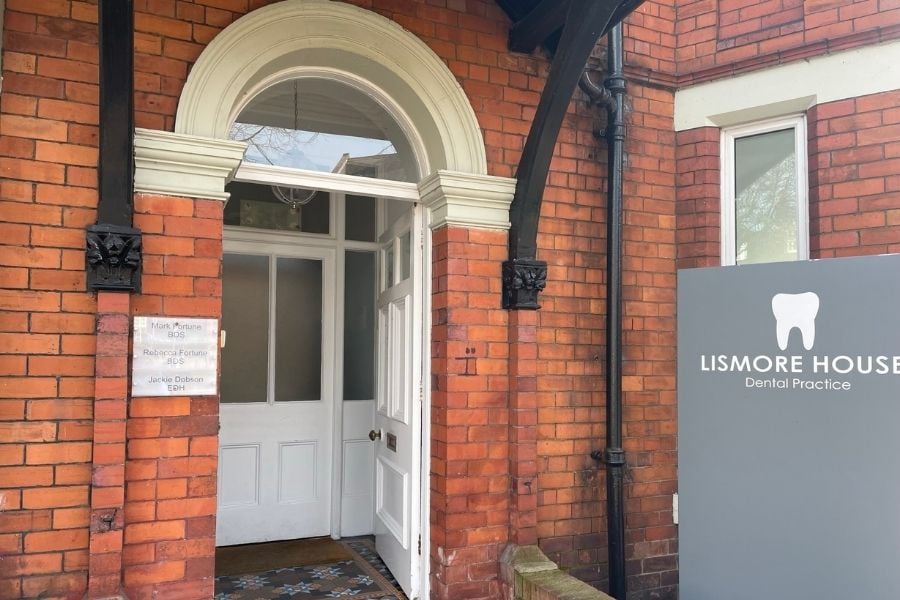
If you are in pain, call Lismore House Dental on 01228 528022. You will find us on Lismore Street, Carlisle, and we welcome both existing and new patients for urgent appointments. Outside our opening hours, NHS 111 can direct you to out-of-hours dental care.
We will find out what is wrong, get you comfortable and help you choose the right way forward for your tooth.